
I Joists
I-joist is a structural member manufactured using sawn or structural composite lumber for flanges and structural panels for webs, bonded together with exterior exposure adhesives, and forming the cross-sectional shape of an “I”. I-joists used in roof construction are supported by exterior walls and a ridge beam.
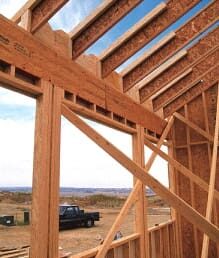
I-joist rafters are blocked at the point which they bear on exterior wall headers. The blocking assures the that the I-joist cannot rotate from their upright position.
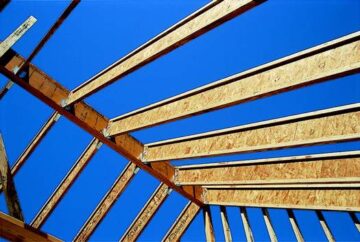
I-joist roof rafters, supported in metal hangers, frame into an LVL ridge beam. The ridge metal-joists are supported in metal hangers.
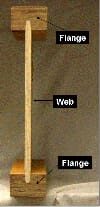
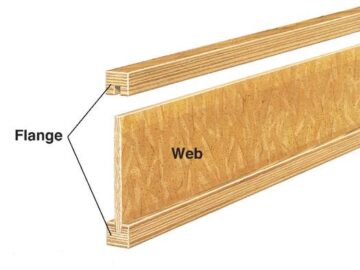
An I-joist is comprised of flange and web material. Manufacturers use different combinations of products, based upon many different factors.

The web is joined to a groove in the flange with strict tolerance. Adhesive is used to secure the joint.
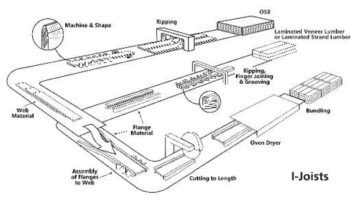
This illustration shows the typical manufacturing process for I-joists.
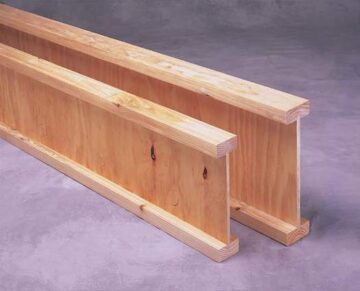
Early I-joists were constructed with solid sawn flanges and plywood webs. OSB has replaced plywood in the web, but lumber flanges are still common.
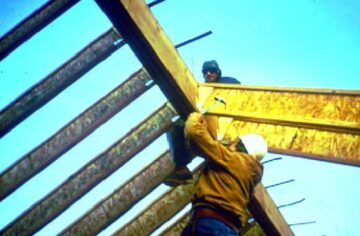
A laminated veneer lumber (LVL) ridge beam is used to support I-joist roof rafters.
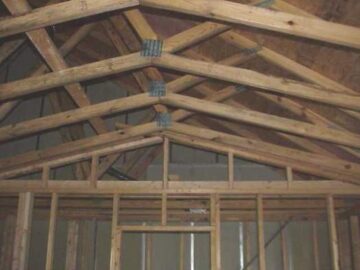
Cathedral ceilings are increasingly common in new home construction. A combination of I-joists, LVL ridge beam and steel columns are used to carry roof loads to the foundation.
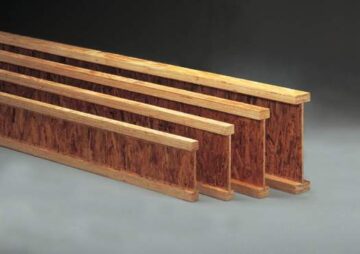
I-joists are available in a variety of depths and web/flange configurations. Most I-joists used in residential construction are slightly deeper than equivalent solid lumber products.
The web material is matched to the flange to create a resource-efficient building product.