
EPA Changes Course on Formaldehyde Risk Analysis
At the end of 2024, the EPA issued its Formaldehyde Risk Evaluation under the Toxic Substances Control Act (TSCA). While it included some hard-earned positive provisions concerning consumer exposure to wood products, it still relied on outdated science to set a low-risk value that could have serious implications for the industry. AWC immediately responded, calling for a new approach to the Formaldehyde Risk Evaluation arguing that the EPA should apply best available science and weight of the evidence analyses as required by TSCA to arrive at a risk value that was, at the very least, in line with global precedent. Through direct outreach to the EPA and close work with partner organizations, such as the American Chemistry Council and Composite Panel Association, AWC was able to help shape a new path forward that has remarkable implications for the industry’s decades long battle for sound science.
Thanks in part to AWC’s efforts, the EPA issued a draft memorandum late in 2025 that proposes significant changes to the 2024 TSCA Formaldehyde Risk Evaluation that, if finalized, would have positive implications for our industry. Most notably, the memorandum proposes to adjust the risk threshold up to 0.3 ppm (or 300 ppb), which is in line with European and other international precedents and significantly higher than the value in the 2024 Risk Evaluation. The EPA supports this revised risk value by rejecting the outdated Integrated Risk Information System (IRIS) assessment previously relied upon in the 2024 report and instead using a best available science analysis. Other changes that are noteworthy include: reducing the uncertainty in the scientific data and enforcing the position that formaldehyde does not align with Haber’s Law. This final measure eliminated the need for any duration adjustment in the risk evaluation. The updated and best available science approach allowed EPA to recalculate formaldehyde risk, and in so doing it found that “adhesives and sealant chemicals in wood product manufacturing no longer contribute to significant risk.” This is the methodology that AWC has actively supported and is consistent with Europe and other key jurisdictions. AWC is preparing comments that support EPA’s revised analysis of inhalation exposure and address remaining, limited concerns with the Agency’s dermal analysis. In addition, AWC will be coordinating closely with industry and association partners to ensure alignment.
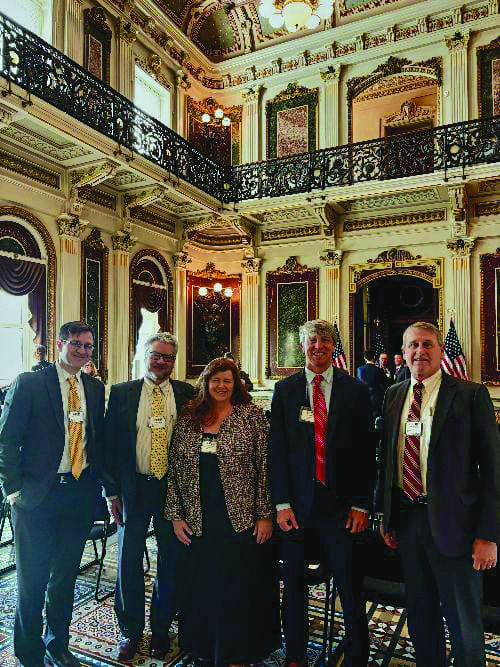
Along with the EPA’s revised analysis, the Small Business Administration is convening a Small Business Advocacy Review panel in which multiple AWC member companies are participating. The panel will review the formaldehyde risk management rule, with the goal of identifying ways to ensure the rule is not overly burdensome to small businesses. AWC is helping coordinate member engagement, which will be critical in reinforcing the importance of the significant proposed changes to the Risk Evaluation, particularly as applied to worker exposure requirements.
Should the EPA’s proposed revisions be incorporated into the final Formaldehyde Risk Evaluation, this would provide the wood products industry with an incredibly hard-fought win that spans decades of investment in research and scientific analysis to ensure that best available science is used to make decisions. It would also pave the way for a much more workable Risk Management process that will apply the final Risk Evaluation to determine if any regulatory measures will be required for wood products. If the EPA follows TSCA timelines for chemical evaluation, then this Administration should be well positioned to complete the formaldehyde analysis within the remaining three years.